Made with AI, checked by people
A Singapore consumer business whose customers deal with it mostly through its app.
/work/human-in-the-loopCame in under strain
- System
- Consumer app, the main way customers deal with the business
- Symptom
- An in-house release made with AI repeated both problems the research had found.
- Region
- Singapore
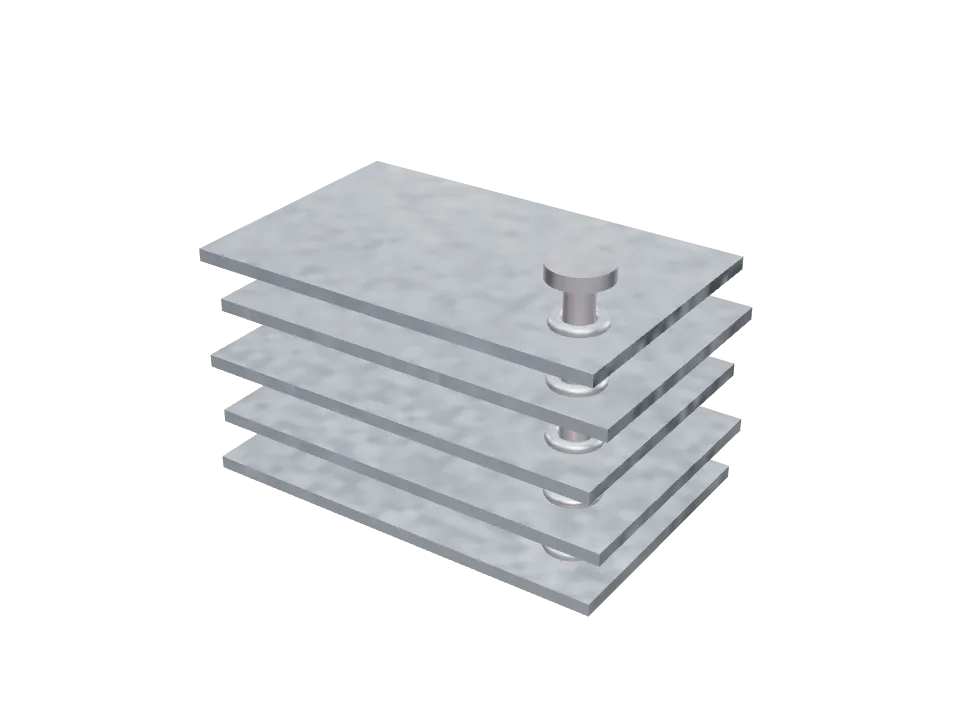
The piece A stack of plates and one pin through every one: each screen checked by someone who knew the research.
- 3monthsuntil the client asked back
- Every screenchecked against the research
- 1testper design principle
- Monthlymeasures against baseline
The ask
Update the app's experience. m-anant ran the research and turned it into a plan, with problems ranked by customer cost and fix effort, design principles, a phased roadmap and success measures. The proposal was for Weave to design it and for us to build it.
The real problem
The client read the plan, decided AI could handle the rest and built the redesign in-house. The release looked like a lot of other apps: a gradient welcome screen with three buttons that all went to the same place, a home screen with eight icons and no single main action, labels taken from the organisation chart and confirmations that said only "Success".
It repeated both problems the research had already found. First use never showed the value, and confidence dropped at the moment of commitment. Within a few weeks the business could see it in its own numbers, and the support team was answering the same questions again.
Underneath was a belief we hear a lot: that AI removes the need for experienced people. It makes screens and code quickly. Deciding which problem matters, which trade-off to accept and whether a plausible answer is right still takes someone who knows.
Where the person sits
- Idle
- Live
- Strain
- Fail
BeforeThe plan was read, then the app was built in-house with AI and shipped. First use and the moment of commitment failed again.
AfterWeave redesigns, AI makes, someone who knows the research checks every screen, and the measures go back against the plan each month.
What we built
Three months after the release the client asked the group back. The shipped app was reviewed screen by screen against the research, the principles and the measures, and the fixes were ranked the same way the original problems had been. First use and the moment of commitment came first.
Weave redesigned those flows and we rebuilt them, with AI doing much of the making. The first screen now does the one job customers open the app for. Labels use the customers' own words, so "fulfilment hub" became "your collections". Confirmations say what was booked, where, when it comes back and how to change it.
How we made it hold
Someone who knew the research checked every screen before it shipped. Every design principle has a test, and every screen has to pass it, whether AI or a person made it.
The success measures had baselines set before the rework shipped and are reported to the client monthly. We now run the app release by release against the plan's measures.
Backstage The decisions behind the build, and the hardest problem
Decisions
Rank the fixes the way the original problems were ranked.
By customer cost and fix effort, so first use and the moment of commitment came first.
A test for every design principle.
Every screen has to pass it, whether AI or a person made it.
Baselines set before the rework shipped.
The measures are reported to the client monthly against them.
The hardest problem
The belief that AI removes the need for experienced people. AI makes screens and code quickly. Deciding which problem matters, which trade-off to accept and whether a plausible answer is right still takes someone who knows.
The difference
- First use and the moment of commitment rebuilt, with AI in the making and every screen checked against the research.
- A test for every principle, passed by every screen.
- Baselines set before release, with measures reported to the client monthly.
- The app is now run release by release against the plan.